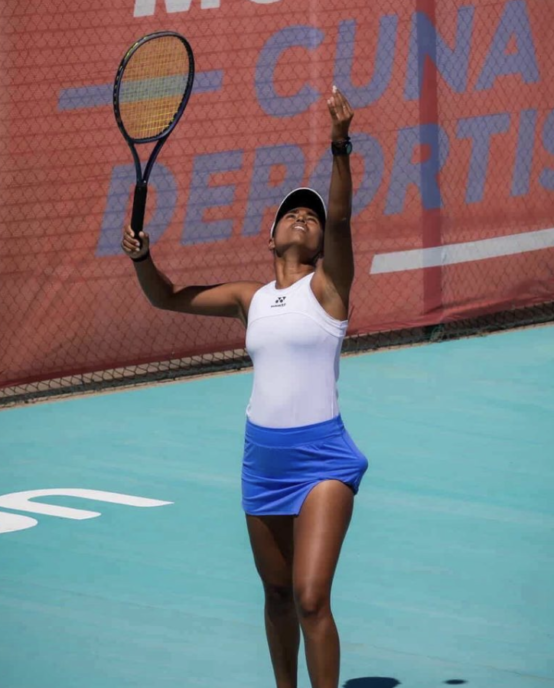
Sohan Reddy
Before the Recognition Came infinite Repetition
Consistency when no one was watching
Running Through Silence, Growing Through Struggle
Long before medals, records, or national level competition, Sohan Reddy was a teenager training alone in empty stadiums at night, learning how to keep showing up without validation. From those isolated sessions in Saudi Arabia to breaking records at DTU and rebuilding himself after a severe injury, his journey became shaped by resilience, quiet consistency, and the realization that athletics was not just about winning races, but about becoming stronger through the process itself.
The Kid Who Ran Before He Could Dream
Long before athletics became serious, Sohan Reddy simply loved movement.
Growing up in Saudi Arabia, he was naturally drawn toward competition. Racing people. Scoring
goals. Winning small games. Sport gave him something the classroom often did not: confidence.
Academics came with pressure.
The football pitch came with freedom.
Even as a child, he instinctively knew which environment felt more like home.
No one pushed him aggressively toward athletics in those early years. The drive came naturally.
Competition excited him in a way few other things did, and sport slowly became the space where he
understood himself best.
Before there were medals, rankings, or structured ambitions, there was simply a boy who loved to
run.
How the athlete first came to the sport. Use strong to highlight key moments.
“No amount of talent can ever beat sheer hard work”
Sohan
Empty Stadiums
Between the ages of 13 and 15, while most teenagers spent evenings online or with friends, Sohan
built a very different routine for himself.
He would show up to an empty stadium at night and train alone.
No coach.
No audience.
No validation waiting at the end of the session.
Just repetition, discipline, and the quiet understanding that improvement depended entirely on what
he was willing to do when nobody was watching.
That phase became foundational to who he later became as an athlete.
Training alone taught him something difficult very early: consistency cannot depend on motivation.
There are days where discipline has to carry you when excitement disappears.
And for years, that was exactly what he did.
Night after night, he kept showing up.
From Isolation to Recognition
Eventually, that discipline caught attention.Sohan was recruited into the Jubail Club, and for the first time, the boy training alone in empty
stadiums found himself competing within a structured national level environment in Saudi Arabia.
The transition carried emotional weight.
Up until then, most of his progress had happened privately, without much external recognition.
Joining the club became the first real validation that his obsession, discipline, and sacrifice were
leading somewhere meaningful.
It changed the scale of his ambition.
What once felt personal now started feeling possible.
The Lockdown That Made Him Better
When COVID shut the world down in 2020 and 2021, many athletes struggled with the sudden loss of
routine, structure, and competition.
Sohan approached the period differently.
During lockdown, he and his twin sister built a training dynamic that became one of the most
important developmental phases of his athletic journey. The exchange was reciprocal. She helped
sharpen his technical understanding, while he pushed intensity and discipline in return.
Those months became more valuable than they initially appeared.
Without the noise of competition, the focus shifted toward refinement. Small details. Technical
consistency. Repetition without distraction.
The lockdown period quietly transformed raw athleticism into something more complete and
controlled.
And the progress became visible soon after.
The Saudi Games
The Saudi Games became the biggest stage Sohan had competed on up to that point.
But the timing could not have been worse.
At the exact same time, he was managing end semester examinations, splitting his attention between
textbooks and starting blocks. Mentally, it felt like living two completely different lives
simultaneously.
Still, he competed.
He finished fourth.
And in that race, he was the only Indian athlete participating.Although he narrowly missed the podium, the experience left something far more important behind. It
reinforced a belief that had already been growing inside him for years:
Hard work beats talent.
That conviction became central to the way he approached both sport and life afterward.
Making a Statement
In 2023, Sohan joined DTU.
For many athletes, the first year of collegiate competition is usually a period of adjustment. New
environments. Higher pressure. Different expectations.
Sohan approached it differently.
At the Inter IIT competition hosted at BHU, he won gold in the 400 metres and broke the college
record in his very first year.
It was not the kind of result people expect from someone still settling into the collegiate level.
It was immediate impact.
A statement that years of discipline had already prepared him for bigger stages.
And the success only strengthened his belief that he was still far from his ceiling.
When Everything Stopped
Then came the injury.
A severe ligament tear forced Sohan into complete bed rest and left him dependent on crutches. For
someone whose identity had been built so heavily around movement, the experience was deeply
unsettling.
The boy who had spent years running under stadium lights suddenly could not walk without help.
For the first time, athletics was completely taken away from him.
The injury interrupted more than training. It disrupted rhythm, confidence, routine, and identity all at
once.
And during recovery, he was forced to confront something many athletes spend entire careers
avoiding:
What remains when sport disappears?
Discovering Life Beyond Athletics
Recovery changed the way Sohan understood himself.For years, athletics had occupied almost every part of his identity. But during the injury period, he
slowly began reconnecting with parts of himself that existed outside performance and competition.
He picked up a pencil and started drawing.
He sat at a piano and started playing music.
His family became a much deeper emotional anchor.
These were not distractions from athletics.
They became reminders that he was more than just an athlete.
That realization fundamentally changed his relationship with sport. Instead of treating athletics as the
only thing that defined him, he began seeing it as one part of a fuller life.
And in many ways, that made him mentally stronger than before.
The Athlete He Is Becoming
Today, Sohan is the Athletics Captain at DTU while studying Mechanical Engineering.
He has already won four gold medals, but when people point toward those achievements, he does
not describe them as the peak of his career.
To him, they represent proof.
Proof that discipline compounds.
Proof that consistency matters.
Proof that years of invisible work eventually reveal themselves publicly.
But more importantly, his mindset has changed.
He no longer trains with desperation or fear.
He trains with gratitude.
What he describes as a “radiant mindset” — a mentality built not only around pushing himself
forward, but around positively impacting the people around him as well.
That shift has made him calmer, more grounded, and more self aware.
And despite everything he has already achieved, he genuinely believes this is only the beginning.
Because for Sohan Reddy, the story was never just about medals.
It was always about becoming someone strong enough to earn them.