Aryaan Bhatia
From Starting Over to Starting Again
The Setback Became Part of the Story

The Athlete Who Had to Build Himself Twice
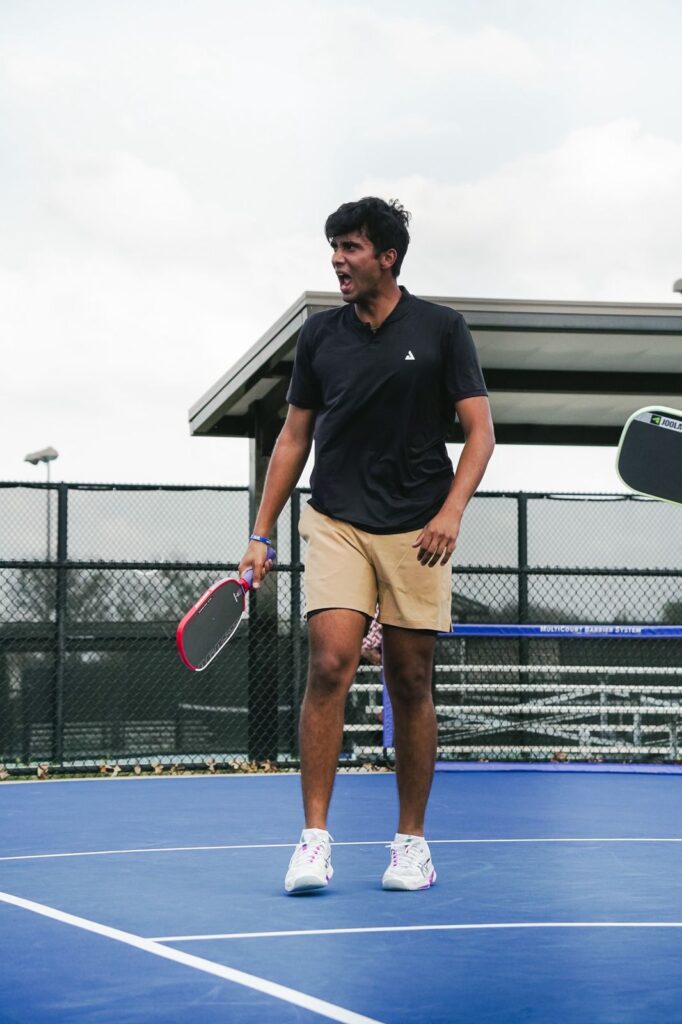
Aryaan Bhatia’s journey through sport has never followed a straight line. From a child who hoped rain would cancel tennis practice to becoming one of India’s top junior players, his life changed dramatically after a public doping case disrupted everything he had built. What followed was years of rebuilding, first in tennis, then unexpectedly in pickleball; where he carried forward the resilience, pressure tolerance, and competitiveness that elite sport had already carved into him.
The Kid Who Hoped It Would Rain
Aryaan Bhatia used to pray for rain.
Every time his parents prepared him for tennis practice, he would look toward the sky hoping the
weather would cancel the session before it began. Tennis was not something he chose early on. It
was simply always around him.
In his family, elite sport was normal. Relatives had played tennis and cricket at the highest levels, and
the racket arrived in his hands almost by default.
But he did not enjoy it.
Then, at eight years old, something changed.
He lost a casual match to a friend. Nothing important was at stake, but the loss stayed with him in a
way practice never had. For the first time, competition felt personal. Losing to someone he knew
ignited something far stronger than pressure from coaches or expectations from family ever could.
That same year, he joined a competitive academy.
And from that point onward, everything became serious.
“Somewhere along the journey, the boy who resisted sport became someone completely shaped by it.”
Aryaan
Becoming “The Tennis Guy”
Tennis teaches a very specific kind of loneliness.
In most sports, teammates become emotional support systems. In tennis, the person warming up
beside you is often the same person trying to beat you a few hours later. Friendships exist, but
competition always sits underneath them.
Aryaan understood that unusually early.
To him, anyone across the net became a work colleague competing for the exact same thing he was.
There was no resentment in that mindset. Just acceptance.
And he adapted quickly.
By the age of nine, he was ranked number one in Maharashtra in the Under 10 category. He held that
position for the next seven years.
At some point, tennis stopped being something he did and became the thing people associated him
with completely.At school, in social settings, and in everyday conversations, he became known simply as the tennis
player.
The problem with becoming an identity that early, however, is that you slowly forget there is still a
person underneath it.
The Headline He Never Asked For
At sixteen, Aryaan Bhatia’s name appeared across major newspapers in India.
Not because of a title.
Not because of a ranking milestone.
Because of a doping case.
A routine test during a tournament in Sri Lanka had returned positive after medication prescribed for a
cough and cold contained a banned substance neither he nor his doctor knew was prohibited.
Overnight, the story spread everywhere.
Headlines labelled him as the first Indian tennis player to fail a doping test. Regulations protecting
minors from public exposure in such cases were ignored completely. His name and face were
suddenly public discussion.
Everything changed almost instantly.
Outside of his family and the few close friends he had known since childhood, people looked at him
differently.
The case eventually went to Delhi. On one side sat lawyers. On the other, a panel made up of a judge,
a doctor, and a sportsperson.
Aryaan spoke honestly.
He explained that there had been no intent to cheat, only a lack of awareness. He described the
situation as a source of education rather than deception.
The panel understood.
Six months later, he won the case.
But the damage had already been done.
His ranking dropped from 400 to 800. The tour had moved on without him. For the first time in years,
the sport he had built his life around felt distant.
Starting Again
What followed was not a dramatic comeback. It was a quieter decision to continue.
Aryaan returned to competition, rebuilt his ranking, and eventually climbed back to 229 in the world
junior rankings. He was later shortlisted for the Australian Open Juniors.But at the same time, another decision stood in front of him.
His Class 12 board examinations.
He chose academics, believing there would still be opportunities to compete in future Grand Slams
after graduating.
Then COVID arrived.
The following year disappeared almost entirely.
Like many athletes during that period, Aryaan was forced into uncertainty, but the next phase of his
life unexpectedly gave him something tennis never had.
College.
For the first time, he experienced what it felt like to truly be part of a team. Winning no longer
depended on one individual performance. Twenty people were responsible together. You could play
brilliantly and still lose, or struggle personally while the team carried you through.
He loved that environment immediately.
He became the number one player in his college, started coaching, built friendships that existed
outside competition, and slowly rediscovered enjoyment in sport itself.
During his final college match, he cried.
His coach noticed.
And afterward, he offered Aryaan an assistant coaching role, telling him he could see him following in
his brother’s footsteps.
The Flight He Never Took
In June 2024, Aryaan returned to Mumbai before heading back to the United States for a master’s
fellowship.
At the time, pickleball was not part of a long term plan.
His brother had built a pickleball academy in Mumbai, and Aryaan was casually helping coach
beginners while spending time at home. There was no pressure attached to it.
Then his brother entered him into the Monsoon Open, one of the country’s major professional
pickleball tournaments.
Partly as a challenge.
Aryaan trained through July.
By 22nd August, he had reached the quarterfinals after defeating a top five ranked player along the
way.His flight back to the United States was scheduled for the 24th.
On the 23rd, his brother told him to stay for two more weeks and see where this could go.
The lease on his apartment in the US had already been signed. His father even offered to continue
paying the rent just in case Aryaan changed his mind later.
But he never did.
He stayed.
And that decision changed everything.
Learning a Second Sport
Aryaan is careful not to describe pickleball as simply tennis on a smaller court.
According to him, the transition is far more difficult than people assume.
The swing mechanics are different. The movement patterns are different. The pace, touch, and timing
all require adjustment. Fourteen years of tennis muscle memory do not automatically transfer. In
many ways, they resist the change.
But mentally, he already understood the demands of elite sport.
The pressure.
The repetition.
The loneliness.
The discipline required to perform consistently.
That part already belonged to him.
Today, Aryaan is one of only two Indians signed with the PPA, pickleball’s premier professional
league. The first was his brother. He is also the first Indian signed to the Asian circuit.
In 2026 alone, he has twenty tournaments scheduled.
His days begin at 7 a.m. and often end at 7 p.m., coaching tennis in the mornings to financially
support his pickleball career in the afternoons.
He has not taken money from his parents since he was eighteen.
He is twenty three now.
Looking Ahead
When asked how close he feels to his peak, Aryaan answers immediately.
Not close at all.
Pickleball players usually peak around twenty five, and he says that with genuine excitement rather
than impatience.There is still more to build.
More to improve.
More to chase.
Aryaan Bhatia once hoped rain would cancel practice.
Now he spends his mornings coaching, his afternoons training, and his year travelling across
continents competing professionally.
Somewhere along the journey, the boy who resisted sport became someone completely shaped by it.
And he stopped checking the sky a long time ago.