Divy Nandan
Making Waves in Motorsport
one lap at a time
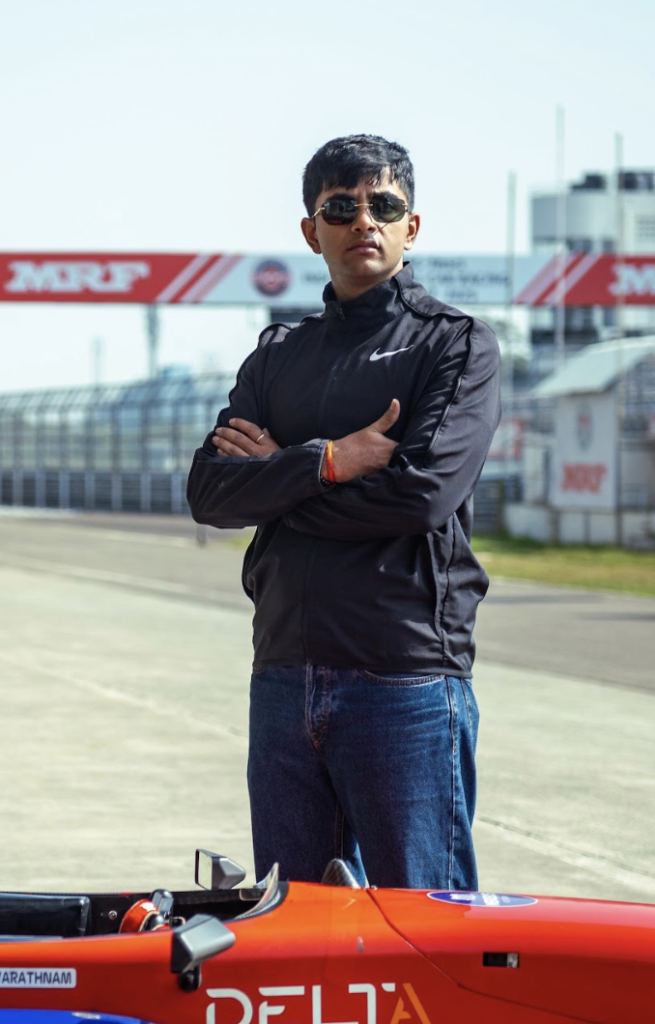

The respect comes from pure performance, the ability to extract the absolute maximum from a car.
Divy Nandan’s journey into the world of motorsport is not what one might expect at first glance. In a sport where most drivers grow up idolising Formula One legends and begin karting as young as four or five, his entry into racing followed a very different path.
When I got into racing I actually didn't watch Formula One at all.
His connection with the sport came from a genuine fascination for speed and driving rather than watching races on television.
Before motorsport entered the picture, Divy was deeply involved in skating, where he competed at the state level. The sport gave him an early appreciation for speed and movement. Looking back, he recalls using traditional quad skates, four wheels arranged somewhat like the wheels of a car, rather than the inline skates commonly used today.
The Accidental Beginning
Motorsport entered his life almost accidentally.
A karting track called Smash Sky Karting opened near Huda City Centre, and he decided to try it out. What began as simple curiosity quickly turned into something more serious. Within just two weeks of discovering the track, he entered a karting competition being held there and finished third.
That result sparked something in him and made him realise that racing might be something worth pursuing seriously. Karting sessions soon became regular, and he gradually began receiving professional guidance.
The Turning Point
The most significant turning point in his career came in 2020, when Narain Karthikeyan, India’s first Formula One driver, happened to visit the same rental karting facility. After observing Divy’s performance on the grid, Narain invited him to Coimbatore. Impressed by what he saw, he brought Divy into his racing academy.
Being associated with the academy also meant expectations arrived quickly. As one of the early drivers under Narain Karthikeyan’s mentorship, there was considerable attention around his performance. The first year, however, came with its own challenges.
Learning the Hard Way
One of the biggest lessons he learned early on was the importance of physical fitness. Initially, he had assumed racing relied mainly on skill rather than conditioning, something he now recognises as a major misconception.
Once he began competing seriously, he realised how physically demanding the sport actually was. Even though he could match competitors through corners, he struggled to maintain pace on straights because of lower endurance and strength.
Determined to improve, he used the pandemic break to completely transform his fitness. By the time he returned to racing, he had lost significant weight and improved his conditioning. The improvement showed immediately on track.
Single-Seater Racing
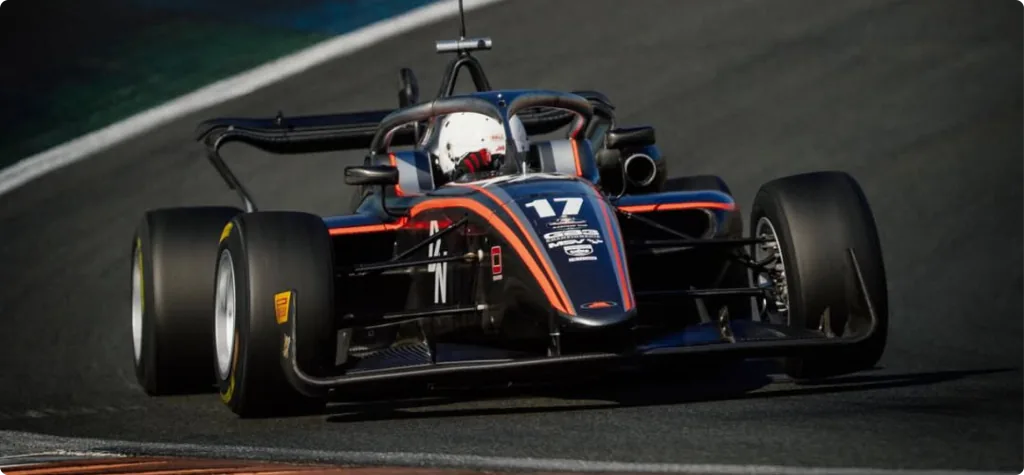
From karting, the natural progression was into single-seater racing. Driving these cars introduced an entirely new level of complexity. Unlike go-karts, single-seaters rely heavily on aerodynamics, downforce and extremely precise technical adjustments.
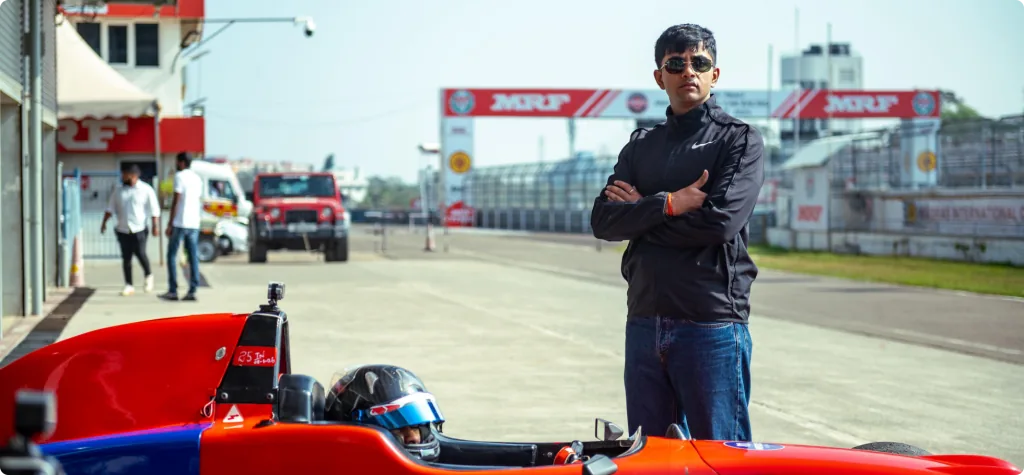
The financial stakes also rise dramatically, since even a small crash can result in expensive repairs.
Despite the risks associated with high-speed racing, Divy emphasises how much safer the sport has become in recent years. Modern single-seater cars are equipped with several safety features, including extremely strong chassis structures and the halo device that protects the driver’s head.
Progress & Achievements
Today, Divy describes himself as a Formula 3 driver, steadily progressing through the ranks of single-seater racing.
Over the past few years he has built experience in both domestic and international competitions, including competing in two rounds of the British Formula 4 Championship.
Despite these milestones, his journey into motorsport still stands out for how late it began. Divy only stepped seriously into racing at the age of eighteen, an age by which many professional drivers have already spent more than a decade in karting.
For him, however, the focus has never been timelines. As he puts it, age is simply a number as long as the results speak for themselves.
Chennai Street Circuit
One of his most memorable performances came closer to home at the temporary street circuit built near Marina Drive in Chennai. Street circuits are particularly demanding because they are constructed from regular roads and are often unfamiliar to drivers.
Competing against several experienced international racers, Divy managed to secure pole position in qualifying, an achievement he considers one of his proudest moments, especially because it came on a track he had never driven before.
Challenges & Resilience
Every racing career carries both highs and lows. For Divy, some of the toughest moments have come not on the track but off it.
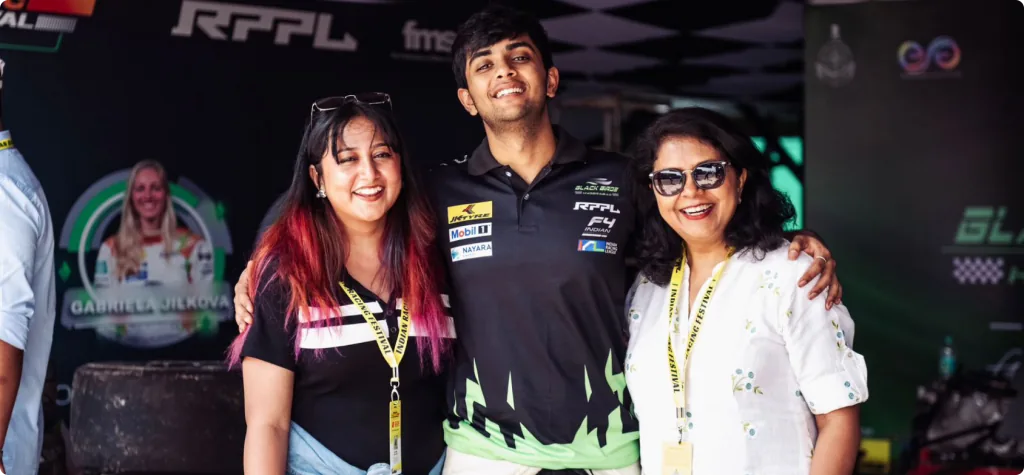
Funding remains one of the biggest challenges in motorsport. Despite strong performances, there have been periods where financial limitations forced him to sit out entire seasons. Motorsport is expensive everywhere, but the challenge becomes even greater in countries where the sport is still developing and sponsorship support is limited.
As he became more involved in racing, Divy also began following Formula One more closely. Among the drivers he admires most is Max Verstappen, whose driving ability and car control he believes are on another level.
Looking Ahead
Outside the track, Divy has balanced his career with academics as well. He completed his undergraduate studies in Sports Management at PES University in Bengaluru, a course that allowed him the flexibility to pursue racing while continuing his education.
Looking ahead, his focus remains on progressing further in International single-seater championships while also building a sustainable future in the sport.
At the same time, he hopes to contribute to the development of motorsport in India. Through coaching younger drivers and exploring plans to build circuits and support systems, he wants to ensure that future racers do not face the same financial obstacles he encountered.
One of his ideas involves encouraging large corporations to use Corporate Social Responsibility (CSR) initiatives to support promising drivers. By creating a structured system of backing and mentorship, he believes talented racers could receive opportunities without struggling as heavily with funding.
For now, however, Divy continues to focus on the immediate task at hand: racing, improving, and securing the support necessary to keep competing.
Age is simply a number as long as the results speak for themselves